Scientific research in seismic and structural engineering, climate resilience, green engineering and advanced structural monitoring.
01 · CALM-BUILDINGS
Hybrid Low-Cost Structural Monitoring System for Urban Buildings Using MEMS-Based Operational Modal Analysis (CALM-Buildings)
Bilateral research project with TU Wien (Vienna University of Technology)
A bilateral research project developing an affordable structural monitoring system for urban buildings through synchronized MEMS measurements and operational modal analysis.
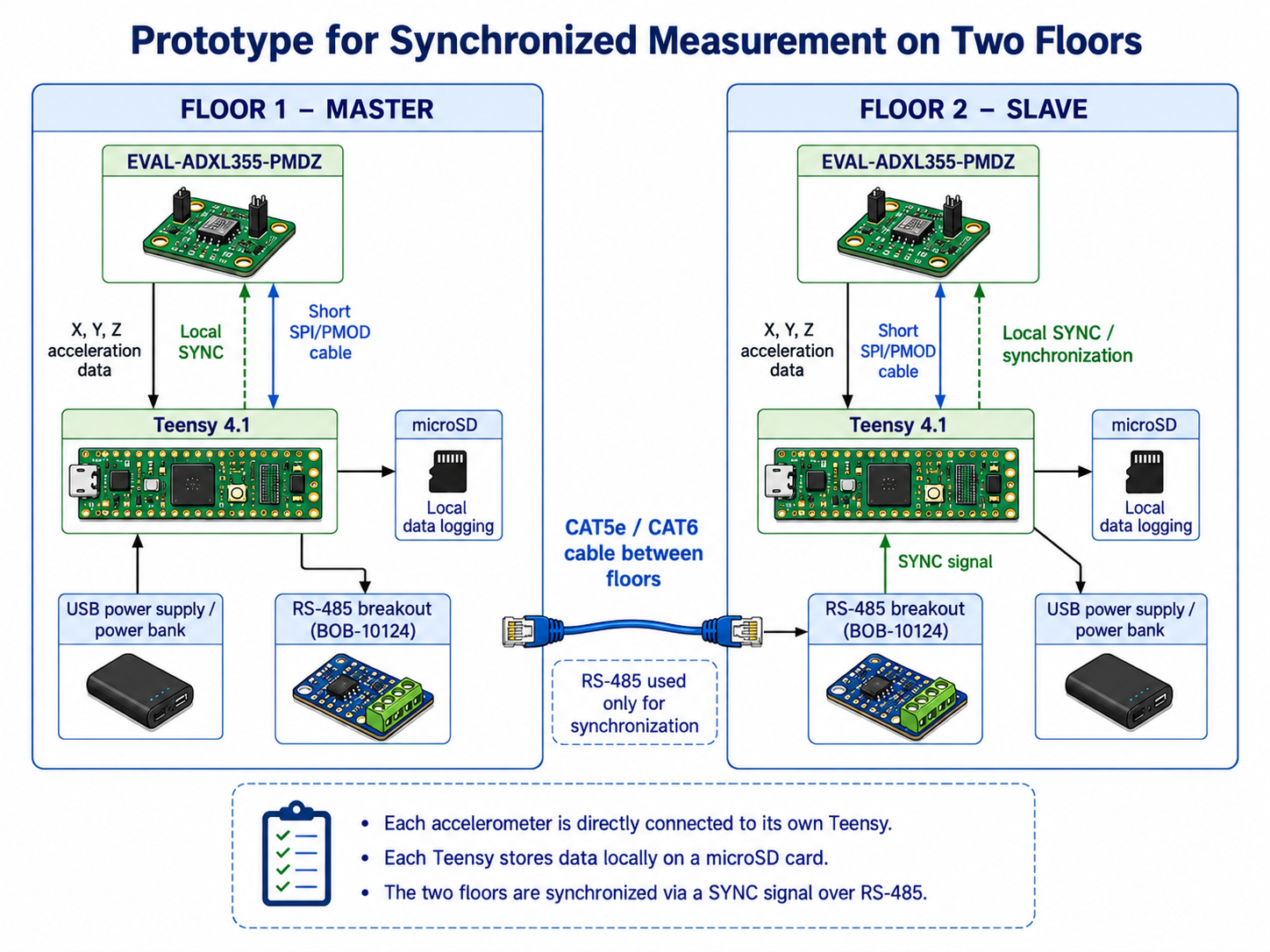
The prototype combines low-cost accelerometers, local data logging and synchronized measurements across multiple floors. The research evaluates whether this modular architecture can provide reliable dynamic properties of buildings while remaining practical for wider urban deployment.
Synchronized MEMS monitoring system concept
02 · DYRI
BACK TO THE FUTURE (BTF) – DYRI
Citizen Seismology and the Reconstruction of Historical Earthquakes
Back to the Future (BTF) is a scientific research initiative developed by the Institute for Seismic Resistant Structures and Climate Change (ISOGKP) to investigate historical and recent destructive earthquakes through the memories and experiences of people who lived through them.
At the core of the project is the original DYRI – “Do You Remember It?” methodology developed by ISOGKP. Using specially designed online questionnaires and social networks, DYRI collects eyewitness information on earthquake effects, building damage, human behaviour, preparedness and public perception of seismic safety.
From Historical Earthquakes to Citizen Seismology
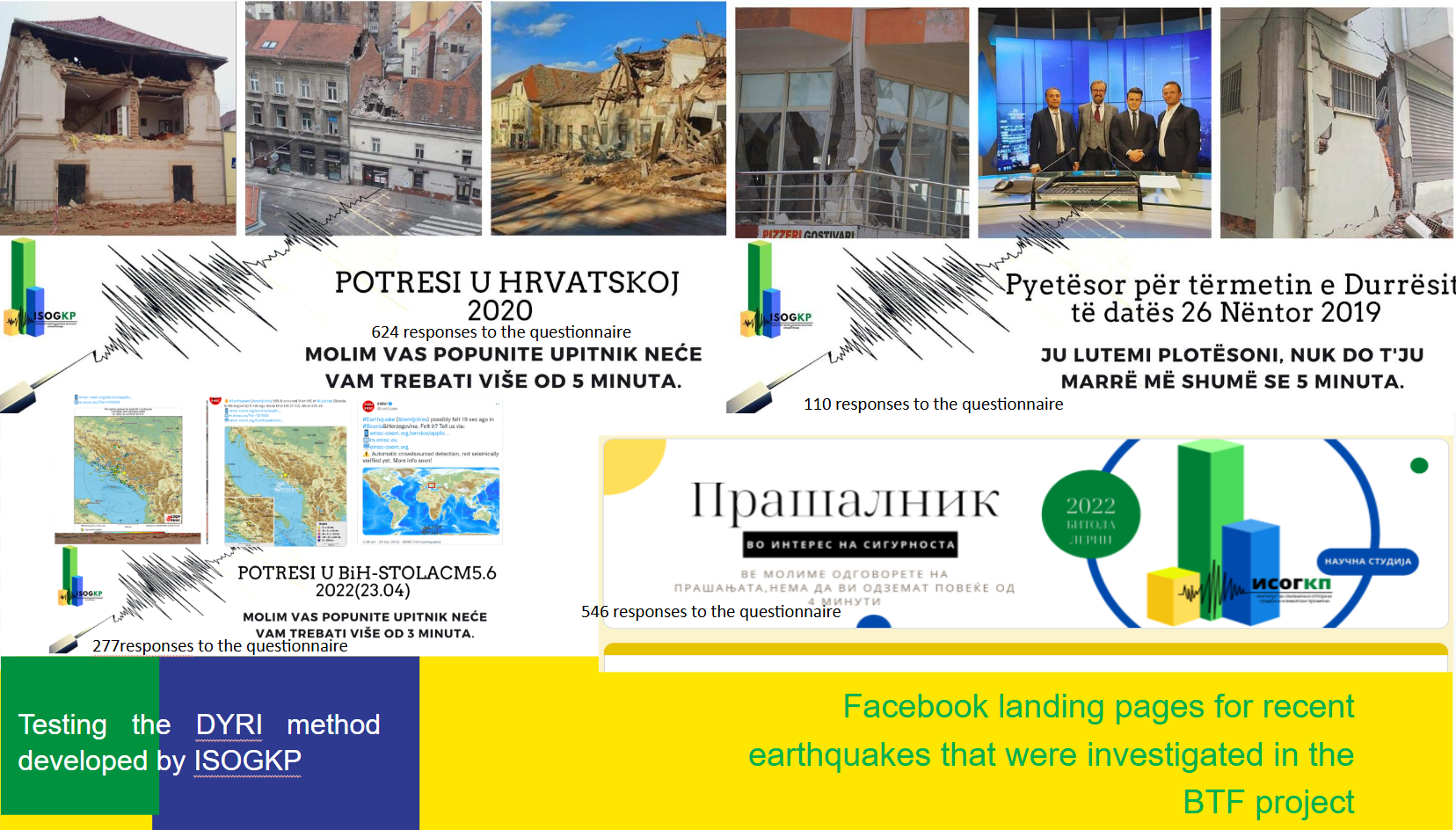
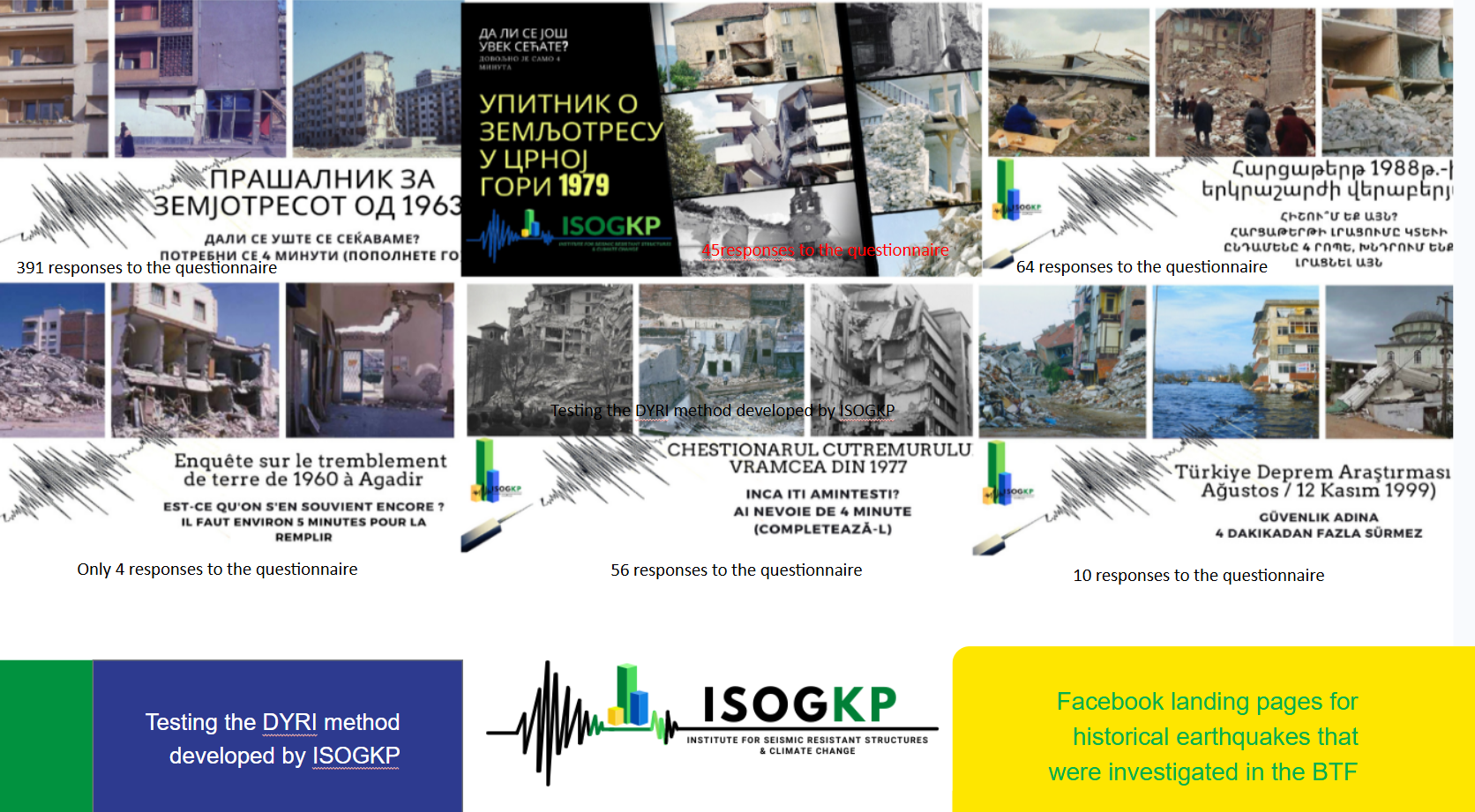
The first pilot application focused on the 1963 Skopje (M6.1), 1979 Montenegro (M6.9) and 1988 Spitak, Armenia (M6.8) earthquakes, for which living witnesses could still provide valuable information. The methodology was subsequently applied to more recent events, including the 2019 Durrës earthquake and the 2020 Croatian earthquakes.
The project demonstrates how citizen seismology can complement instrumental and historical records, particularly for earthquakes that occurred before modern strong-motion monitoring and internet-based reporting systems.
Scientific and Societal Value
DYRI provides a way to preserve valuable eyewitness information before it disappears with time. The collected data can contribute to a better understanding of historical earthquakes, building performance, human response and long-term public perception of seismic risk.
The research has also expanded toward earthquake preparedness and public confidence in building safety, linking scientific investigation with seismic-risk awareness and public education.
Developed by ISOGKP Institute for Seismic Resistant Structures and Climate Change
03 · EARTHQUAKE PREPAREDNESS
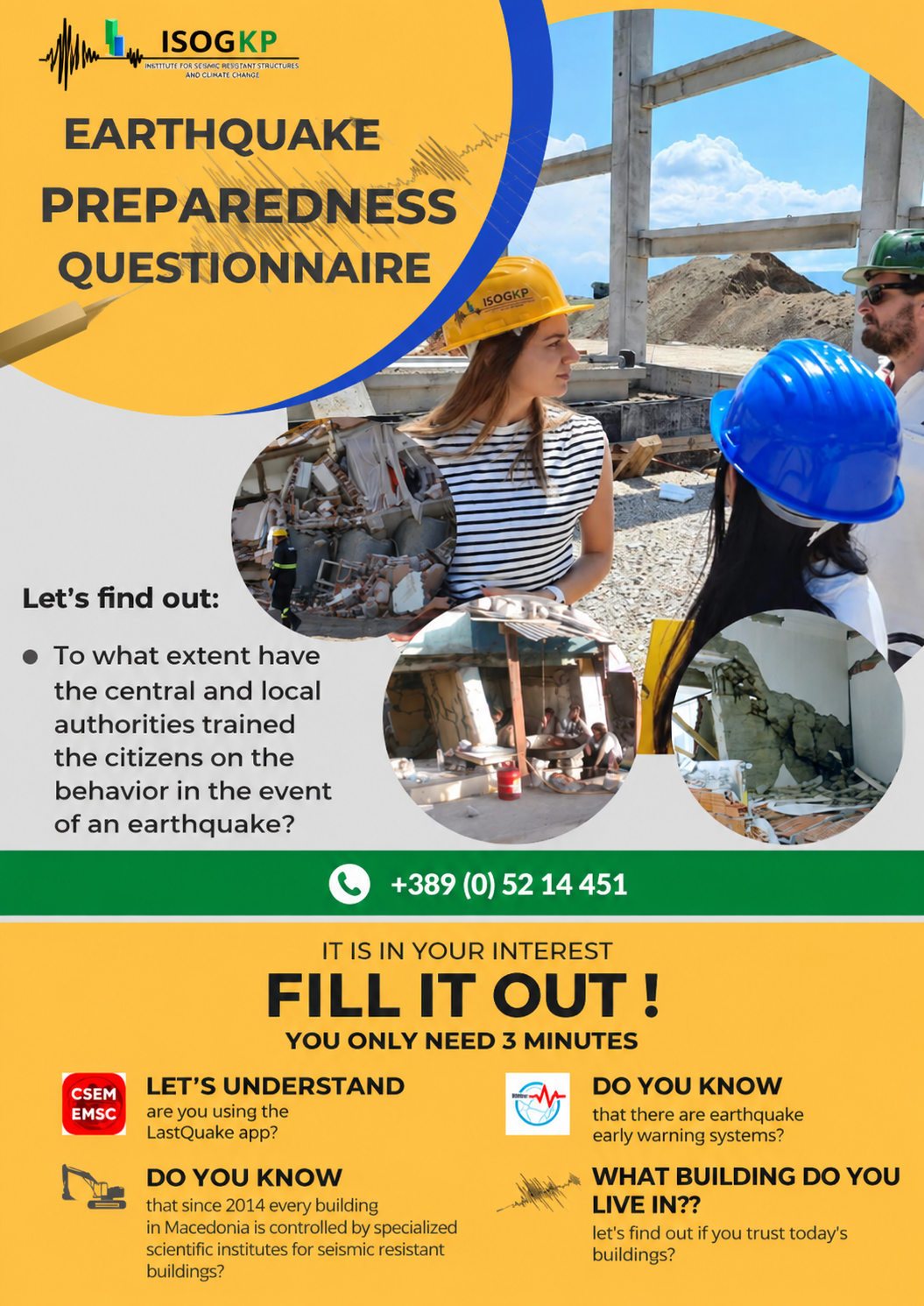
Earthquake Preparedness & Public Perception
Citizen Behaviour, Preparedness and Confidence in Building Safety
Earthquake Preparedness & Public Perception is an ISOGKP research project investigating how citizens understand earthquake risk, how they behave during seismic events, and how much confidence they have in the seismic safety of the buildings in which they live.
Using online questionnaires and citizen participation, the project combines earthquake engineering with public perception, preparedness and disaster-risk education. The research was initiated to better understand citizens’ knowledge and preparedness and their ability to respond appropriately during an earthquake.
Learning from the 2022 Bitola Earthquake
Following the 2022 Bitola earthquake (M5.4), ISOGKP conducted a citizen survey involving 545 participants, including 432 residents of Bitola. The survey provided information on how people experienced the earthquake, how they reacted and how prepared they were to protect themselves.
The results revealed a gap between general awareness and practical preparedness. While 85% of respondents considered that they should remain inside and seek shelter rather than immediately leave the building, only 8.8% identified sheltering under a table as an appropriate protective action.
Confidence in Building Safety
The project also investigated public confidence in the seismic safety of buildings in North Macedonia. Citizens expressed the greatest confidence in buildings constructed after the 1963 Skopje earthquake, particularly those built between 1964 and 1980.
This finding raises an important research question: Does public confidence in buildings correspond to their actual seismic design, construction quality and level of engineering control? Understanding this relationship matters because people’s perception of their building’s safety may influence their behaviour during an earthquake.
From Research to Preparedness
The findings indicate the need for continued earthquake education, public-awareness programmes and practical preparedness exercises. The project aims to turn citizen survey data into knowledge that supports better risk communication, earthquake preparedness and community resilience.
How prepared are citizens to respond correctly when the next earthquake occurs?